
What Happens on the Debutante Ball Night

EVENTS BY SEPE
Complete Guide to Debutante Ball
- Home
- Events Blog
75+Events hosted
2,600+Debutantes presented
6Years of Excellence
$20K+Raised for charity
A debutante ball is a formal evening at which young adults are presented to their community, having learned and then performed a set ballroom routine. In Australia it is usually called a “deb ball” or simply “a deb”. It typically involves people aged around 15 to 18, and it centres on a presentation: each debutante is announced, walks out with a partner, and dances. The modern version keeps the formality and the dancing and has dropped almost everything else.
We have run more than 75 of these events and presented over 2,600 debutantes since 2021. This guide is written from the inside: what actually happens, what it involves, what it costs, and what families ask us most.
Key takeaways
- A deb ball is a coming-of-age celebration built around a formal presentation and a rehearsed group ballroom dance.
- Anyone aged 15 or over can take part in ours. Each debutante is presented with a partner, who doesn’t need to be a romantic one.
- Six compulsory dance lessons over five weeks come first. No dance experience is needed.
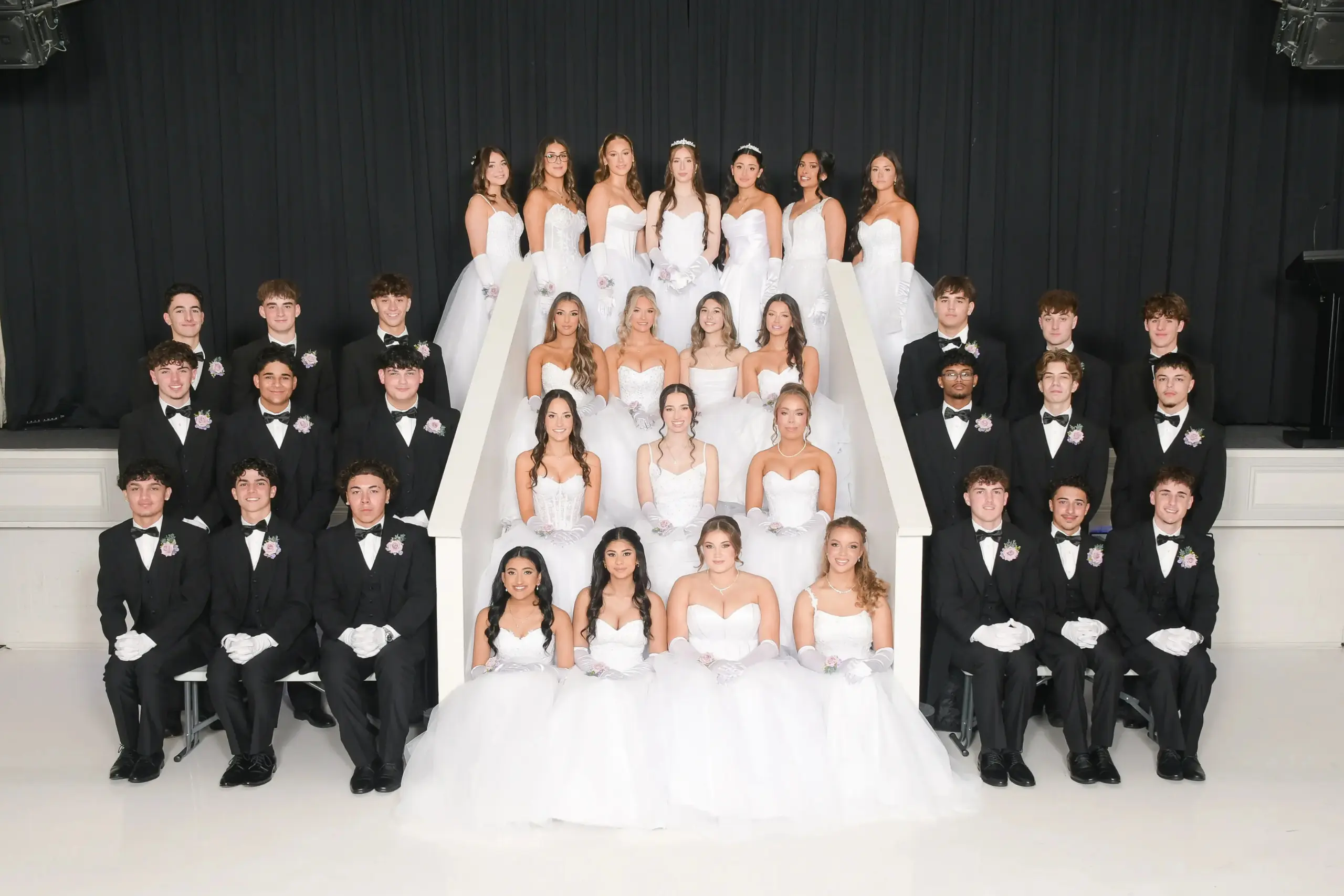
- Female debutantes wear a pure white gown. Male debutantes are given a full suit, and gloves are gifted on arrival.
- The night runs four to five hours: arrival, presentation, debutante dance, dinner, then open dancing.
- You don’t need a school. Friendship groups register directly, and that is now the normal route.
What happens at a debutante ball
The shape of the night is consistent, whoever runs it. At an Events by SEPE ball it runs roughly like this.
- Arrival. Debutantes arrive in their chosen transport. Professional photographers and a videographer capture each debutante stepping out of the car. Every debutante is gifted flowers, gloves and a presentation sash on arrival.
- Guests are seated. We seat a maximum of twelve guests per table, and each debutante’s family purchases a minimum of six tickets, so most tables are family groups.
- The presentation. The formal centrepiece. Each debutante is announced by name and presented with their partner, usually descending a staircase or entering along a set path, to applause.
- The debutante dance. The routine the group has rehearsed over five weeks: a modern version of traditional ballroom. This is the moment the whole programme builds towards.
- Dinner. A seated meal.
- Speeches and the charity segment. Short speeches and, on most nights, a raffle for our nominated charity.
- Open dancing. The floor opens to everyone: debutantes, partners, parents and grandparents. This is usually where the night stops being formal and starts being fun.
Photographs are taken throughout: formal group shots, family portraits and candids. The whole evening generally runs four to five hours.
The running order of a deb ball
- 1StartArrival & photos
- 2+30 minGuests seated
- 3+45 minThe presentation
- 4+1 hr 15Debutante dance
- 5+1 hr 45Dinner
- 6+2 hr 45Speeches & charity
- 7+3 hr – endOpen dancing
Times are approximate and vary by venue. You're welcome to share this guide with your school community or parent group.
Who takes part in a deb ball?
At an Events by SEPE debutante ball, anyone aged 15 or over can take part. There is no upper age limit and no requirement to be enrolled anywhere in particular.
Each debutante is presented with a partner. The partner does not need to be a romantic partner: a friend, a cousin or a classmate is completely normal and extremely common. Partners attend all six dance lessons alongside the debutantes.
Most debutantes are between 15 and 18, which in Victoria usually means Year 10 or Year 11. But the age is a guideline rather than a rule, and we have presented debutantes either side of it.
The dance lessons
Every debutante and partner completes a five-week dance programme before the ball. The lessons are held in the City of Casey, usually in the suburb of Berwick, and all six are compulsory. The routine is performed as a group, so everyone needs the same rehearsal.
The style is a modern version of traditional ballroom dancing. No prior dance experience is needed or expected, and the large majority of our debutantes have never done any formal dancing before they start. Five weeks is enough to be genuinely good at one routine, and the transformation from week one to week five is the part families remember most.
There is no separate fee: the lessons are included in your registration.
What debutantes wear
Female debutantes wear a pure white floor-length gown, which traditionally represents modesty. Male debutantes are provided a full suit as part of their fees, so there is nothing to hire or buy.
Two things families buy that they don’t need to. Gloves are gifted to every debutante on arrival at the venue, along with flowers and a presentation sash, so please don’t buy your own. And male debutantes don’t need a suit hired, because one is provided.
When choosing your gown, remember that Events by SEPE requires female debutantes to wear pure white. Choose a style that allows you to move comfortably during the presentation and dancing.
What guests wear
Guests dress formally (black tie or cocktail) and should not wear white, ivory or cream. The debutantes are in white and the presentation photographs need to read clearly.
Beyond the dress code, most first-time guests want to know when to arrive, when to clap, whether to stay seated and whether to bring a gift. The short answers:
- Arrive fifteen minutes early, because latecomers are held at the door during the presentation.
- Applaud every debutante, not only the one you know.
- Stay in your seat so you are not in the professional photographs.
- No gift is expected.
Hair and makeup
A white gown, a professionally photographed arrival and three hours of dancing put particular demands on hair and makeup. The reliable choice is something secured off the face: a low bun, a chignon, or a properly pinned half-up style. Hair worn down is the most common regret, because it loosens once the dancing starts.
Makeup should be matte rather than dewy and a shade stronger than everyday, because flash photography flattens colour and definition. Book six to eight weeks out and do a trial three to four weeks before.
What does a deb ball cost?
Planning for a debutante ball involves registration fees, guest tickets and personal preparation costs. Contact Events by SEPE for current registration fees, package inclusions and ticket prices for your chosen event. Deposits or full payment can be made through our registration link.
Each debutante’s family must purchase a minimum of six guest tickets, with a maximum of twelve guests seated per table. Your overall budget will depend on how many guests attend and your choices for clothing, styling and transport.
Families should also consider the cost of a gown and alterations, hair and makeup, shoes and transport. Male debutantes are provided with a full suit as part of their fees.
For help understanding the costs and preparing for your ball, contact our team at events.sepe@gmail.com.
Can you do a deb without your school?
Yes. Many schools in Melbourne’s south-east no longer host debutante balls, and families frequently assume that means their daughter or son has missed the opportunity entirely. It does not.
We actively encourage debutantes to take part with their friendship group, whether those friends are from school or from outside it. No school involvement is required at any point in the process. You register directly with us, you attend the lessons with the group, and you are presented on the night exactly as you would be through a school.
In practice this has become the normal route rather than the exception. As schools have stepped back, independent organisers and friendship-group debs have taken their place. If you are ready to take part, you can register for our next debutante ball in Melbourne.
The history of the debutante ball
The debutante ball began in Britain as an aristocratic ritual. “Debutante” comes from the French débutante, meaning a female beginner or someone making a debut. From the eighteenth century onwards, young women from wealthy families were formally presented at court at the start of a social season, and the presentation functioned as an announcement that they were of marriageable age.
That original purpose is long gone. Court presentations in Britain ended in the 1950s, and the version that took root in Australia (particularly in Victoria, through schools, churches and community groups) became something quite different: a coming-of-age celebration and a community event, without the matchmaking.
What survives is the formality, the presentation and the dance. What has gone is the class gatekeeping, the marriage market, and the assumption that it is only for young women. Male debutantes are presented at our balls as a matter of course.
What is the purpose of a debutante ball today?
Three things, in our experience of running more than seventy of them.
- A milestone. Australian teenagers have very few formal rites of passage. A deb gives one: a night where a young person is announced by name, in front of the people who raised them, having worked at something for five weeks to get there.
- A shared achievement. The dance programme is the part families underestimate. Five weeks of lessons with the same group produces a real bond, and a routine performed well in front of a full room is something the debutantes are genuinely proud of.
- A community event. Grandparents come. Extended family come. It is one of the few occasions where three generations get dressed up and are in the same room dancing.
We have also raised more than $20,000 for charity through these events, which we think is a reasonable answer to anyone who assumes a deb ball is purely ceremonial.
Debutante balls in Australia: how they work here
Australian deb balls, and Victorian ones in particular, differ from the British original and from American cotillions in a few consistent ways:
- They are community-run, not aristocratic. Schools, churches, sporting clubs, community organisations and independent organisers run them. There is no social register and no gatekeeping.
- They are usually for 15 to 18 year olds, often tied to Year 10 or 11, though there is no requirement to be at school at all.
- The dance is central. In Australia the rehearsed ballroom routine is the heart of the event, more so than in most overseas equivalents.
- Male debutantes are normal. Not universal across all organisers, but standard at ours.
- They are frequently charity fundraisers. Many Australian deb balls raise money for a nominated cause on the night.
- School-run debs are declining. This is the significant recent shift, and it is why friendship-group debs now make up so much of the market.
Explore the complete debutante ball guide
Every part of this guide has its own in-depth article. Start wherever your question is.
Debutante Ball Dresses
The white rule, silhouettes that dance well, gloves, shoes and alterations.
What Happens on the night
The running order, stage by stage, from arrival to the last dance.
The dance lessons
Five weeks in Berwick: what each lesson covers and what to bring.
what it costs
Registration, tickets, the gown, hair and transport, with real totals.
Debs without school
How friendship-group debs work and who can join.
The guest guide
What to wear, when to arrive, and when to clap.
Hair and makeup
Styles that survive three hours of dancing and the camera flash.
The history
From British court presentations to Australian Community halls.
2027 dates
Upcoming balls, venues and when registration open.
Debutante ball FAQ
Quick answers to the questions families ask the most.
Frequently asked questions
What is a deb ball?
A deb ball, short for debutante ball, is a formal evening at which young adults are presented to their community and perform a rehearsed ballroom routine with a partner. In Australia it is a coming-of-age celebration, usually for people aged around 15 to 18.
What age do you do a deb ball in Australia?
Most debutantes are between 15 and 18, which in Victoria usually means Year 10 or Year 11. At an Events by SEPE ball, anyone aged 15 or over can take part, and there is no upper age limit.
Do you need a partner for a deb ball?
Yes, each debutante is presented with a partner and dances with them. The partner does not need to be a romantic partner. Friends, cousins and classmates are all completely normal, and partners attend the five weeks of lessons alongside the debutantes.
Can you do a deb without your school?
Yes. Many schools in Melbourne’s south-east no longer host debs, and you do not need a school to take part in ours. We encourage friendship groups to register together, whether those friends are from school or elsewhere.
How long does a deb ball go for?
Expect four to five hours from arrival to the end of the night: arrival and photographs, the presentation, the debutante dance, dinner, then open dancing.
How many dance lessons are there?
Six, held over a five-week period in the City of Casey, usually in Berwick. All six are compulsory because the routine is performed as a group. No previous dance experience is needed, and there is no separate lesson fee.
What do you wear to a debutante ball?
Female debutantes wear a pure white floor-length gown. Male debutantes are provided a full suit as part of their fees. Gloves are gifted on arrival, so there is no need to buy them. Guests dress formally (black tie or cocktail) and should not wear white.
How much does a deb ball cost?
At our balls, registration is [REGISTRATION FEE] and guest tickets are [TICKET PRICE], with a six-ticket minimum per family and all fees paid in full at registration. Families should also budget for the gown and alterations, hair and makeup, shoes and transport.
How many guests can a debutante invite?
Each debutante’s family purchases a minimum of six tickets, and we seat a maximum of twelve guests per table.
What is the meaning of "debutante"?
It comes from the French débutante, meaning a female beginner or someone making a debut. Historically it described a young woman being formally introduced to society for the first time.
Are debutante balls still a thing in Australia?
Yes. School-run debs have declined, but independent and friendship-group debs have grown to replace them. We have presented over 2,600 debutantes across more than 75 events since 2021.
Taking part in a debutante ball
Anyone aged 15 or over can register, with or without a school, on their own or with a friendship group.
Register for our next debutante ball in Melbourne, read the full FAQ, or see photographs from our previous balls.